Vinaigrette 101: Mastering the art of homemade salad dressing
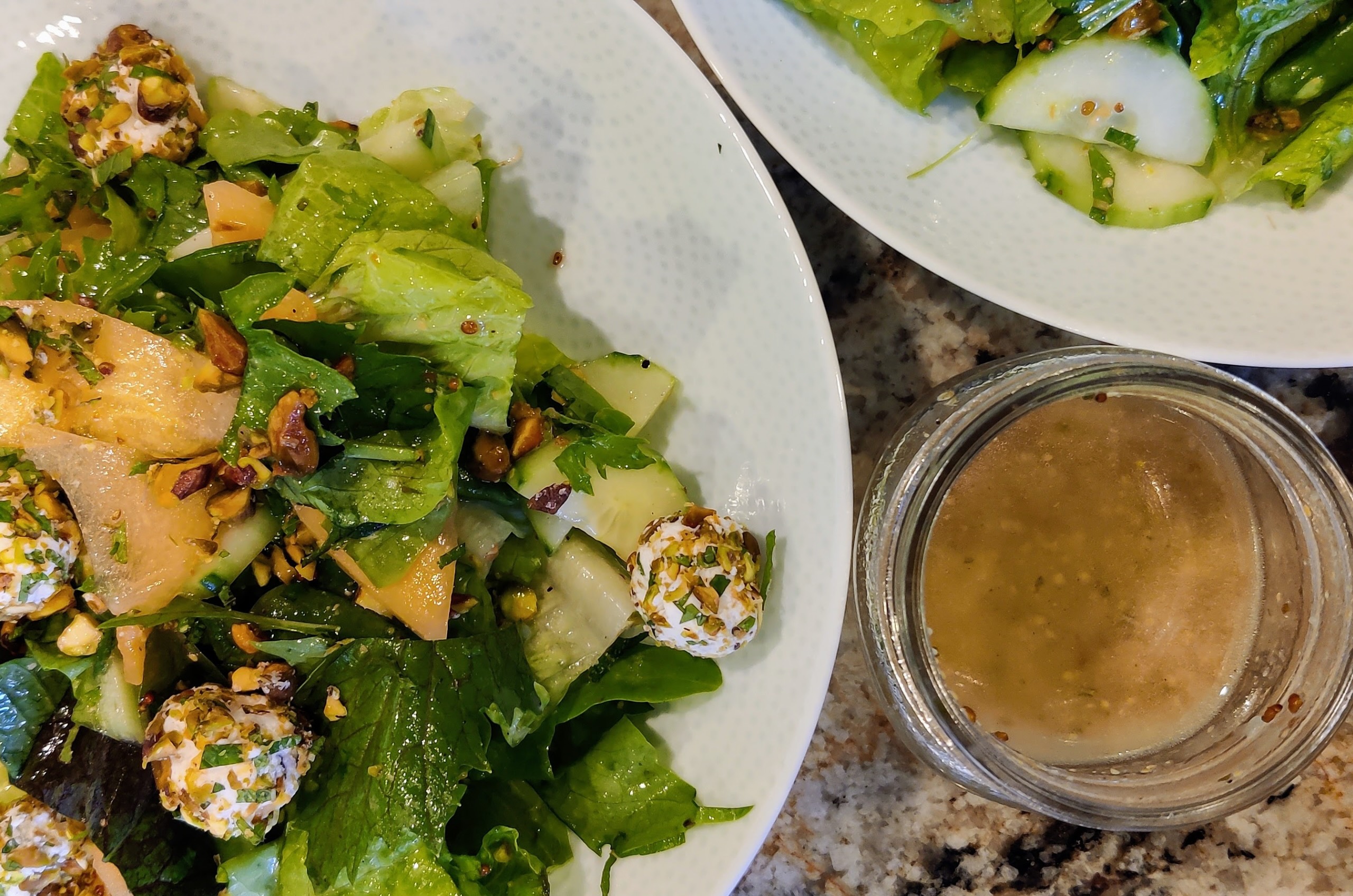
Welcome to the heart of every good salad — homemade vinaigrette! If you’re as salad-obsessed as we are, then you’ll want to know the basics of crafting the perfect dressing. We’re talking about a simple, tangy blend of olive oil and vinegar that can make any salad go from “meh” to outstanding.
Why Homemade?
Store-bought dressings are expensive compared to the cost of making them at home and are usually packed with preservatives, gums, and bland flavors. Once you start making your own vinaigrette, there’s no turning back. Not only is it quick and easy, but it also tastes infinitely better-and you control what goes into it, making it a healthier more sustainable choice.
This post contains affiliate links, please see our privacy policy for details. If you purchase something through these links we may earn a small (very small) commission at no cost to you and we do really appreciate your support.
The Basic Formula
The traditional French vinaigrette calls for a ratio of 1 part vinegar to 3 parts olive oil. We lean toward a little more vinegar for extra brightness. Here’s what you need:
- Olive oil — your foundation. Use a good-quality extra virgin olive oil for the best flavor (affiliate link)
- Vinegar of choice — balsamic, red wine, white wine, apple cider, or our homemade rhubarb vinegar. Get creative!
- Salt and pepper — to taste. A flaky finishing salt makes a real difference. (affiliate link) and is also great on baked goods!
- Dijon mustard — helps emulsify the dressing so it stays blended longer.
- Maple syrup or honey — a touch of sweetness that also helps bind everything together.
- Shallot or garlic — minced finely for an extra savory depth.
Tip: A small glass jar with a lid is the easiest way to make vinaigrette — just add everything, shake, and store. (affiliate link)
Classic homemade vinaigrette
Equipment
Ingredients
- 6 tbsp extra virgin olive oil
- 2 tbsp vinegar of choice
- 1 tsp Dijon mustard
- 1 tsp maple syrup or honey
- 1 small shallot minced (or 1 clove garlic)
- Salt and pepper to taste
Instructions
- Combine all ingredients in a bowl or jar.
- Whisk well (or shake the jar) until fully emulsified.
- Taste and adjust — more oil if too sharp, more vinegar or salt if it needs a lift.
- Serve immediately or refrigerate for up to 2 weeks. Shake before each use.
Vinaigrette Variations
Once you’ve got the base down, the variations are endless. Here are three favorites:
- Balsamic Vinaigrette: Bold, slightly sweet, and incredibly versatile. Use a good-quality aged balsamic vinegar for the best results. (affiliate link) Perfect for green salads topped with fruit — apples, strawberries, or peaches all work beautifully.
- Red Wine Vinaigrette: Punchy and robust. Pairs well with bold, bright vegetables like tomatoes, bell peppers, and olives. A natural match for a classic Niçoise or Greek salad.
- White Wine Vinaigrette: Mellow and delicate. Ideal for spring greens, cucumber, zucchini, and sweet corn. Great when you want the vegetables — not the dressing — to shine.
Rhubarb Vinaigrette: A Tine + Tumbler Twist
For a unique and sustainable twist, try swapping the vinegar with our homemade rhubarb vinegar. Just follow the basic recipe above with rhubarb vinegar in place of any other vinegar. It’s tangy, fruity, and unlike anything you’d find at the store, the kind of detail that makes a simple salad feel like something special.
Ready to Get Dressing?
Now that you’ve got the basics, it’s time to experiment! Try different vinegars, herbs, citrus zest, or a spoonful of white miso for an umami boost. The best vinaigrette is the one that’s made with what you have and adjusted to your taste.
Share your favorite combinations in the comments, we’d love to hear what you’ve been making!
2 thoughts on “Vinaigrette 101: Mastering the art of homemade salad dressing”